The night, written down
CareLog observes bedside patients without a camera and leaves what happened that night as a record the next shift can read.
How it started
Most of the patients I visit at home are older people who spend their days in bed. Ask them how they have been and the answer is almost always “fine”. Ask their care worker separately and you hear something else — “she coughed all night a few days ago”. The patient does not remember, the family did not know, and the doctor who comes once every month or two finds out long afterwards.
Nothing available closed that gap. Older patients often refuse a wearable or take it off themselves, and a camera in the bedroom is hard for patients and families to accept. Above all, most detection devices only produce a signal when something goes wrong, so for a night when nothing happened there is no record at all.
What was needed was a record, not an alarm. To make the next decision you need to know how the patient has been in between, more than you need news of an incident. So we built something to keep watch through the hours when nobody is there, and hand the morning a record.
Who builds it
Runs a clinic in Gangbuk-gu, Seoul, together with a long-term-care home medical centre and a home-visit clinic.
More of the background
- MD and MSc, Yonsei University · internship and residency, Severance Hospital · clinical fellow in rheumatology, Seoul National University Bundang Hospital
- Former Director, Medical Affairs and Oncology, MSD Korea
- Former Medical Director and Korea business development lead, Lunit
- Former Director, business development, Mint Venture Partners
The observation, aggregation and handover-writing pipeline was built by hand. Running the home medical centre means what gets built is checked in the field straight away. Sensing, clinical validation and nursing records are each carried by a colleague in that field.
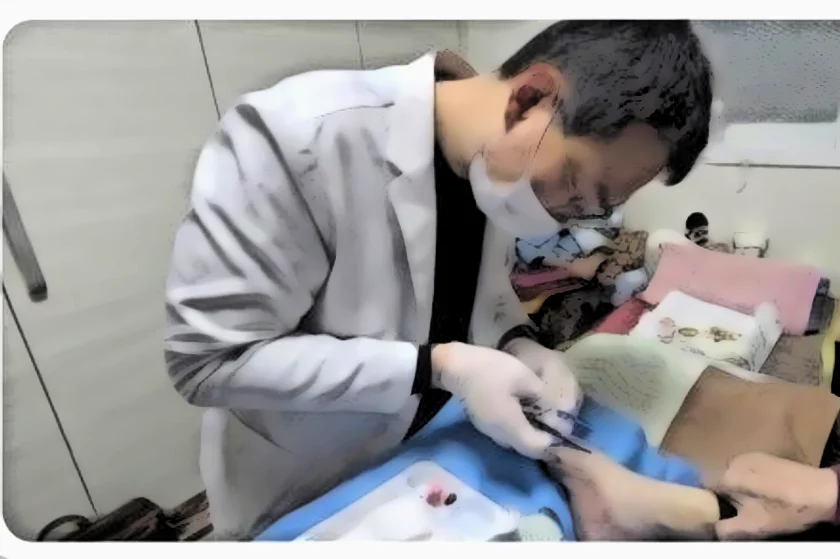
 A home visit — drawn from an actual photograph of the work.
Ward observation technology is already in hospitals elsewhere. Within that, CareLog chose the side that does not use a camera and the side that does not rule on anything.
- No diagnosis and no alarm. Observation, and a suggestion to check, and no further.
- What was not seen is never written as what did not happen.
- Why it ruled the way it did can always be traced back.
- What the device cannot do is written plainly, in the documents and on the screen.
For trials, demonstrations or collaboration, use the Contact button at the top of the page.