The real screens, on made-up data

The live screen and the night record screen below are the screens a nurse actually uses. They were not built for this page; only the data has been swapped for a made-up night.

Every time and value on this page is sample data, not a real patient record. Turning a device on or off does nothing in the sample.
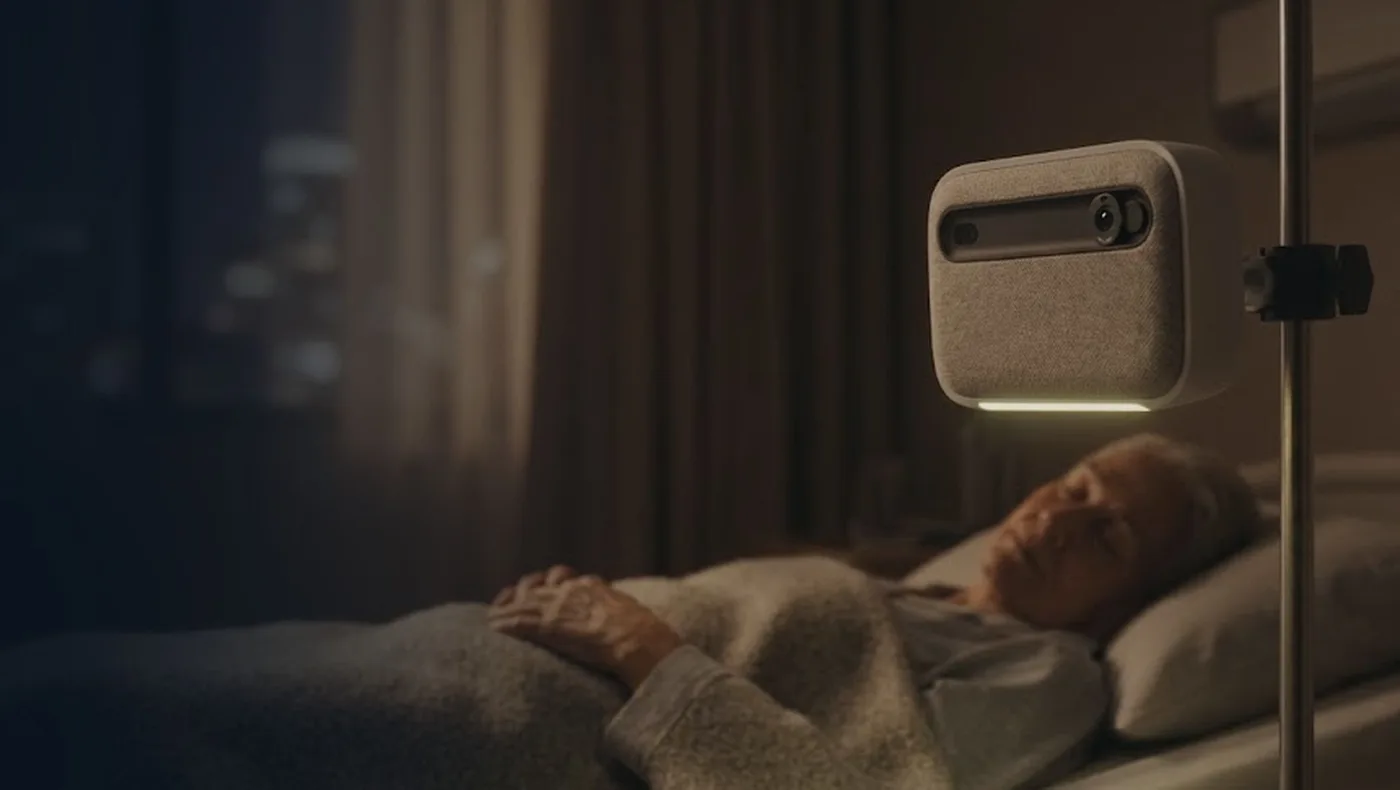
How it sits beside the bed
The design of the device we are building.

Live screen

What the night shift looks at. One device and several devices are not the same screen.

These are the real screens, running in English. The longer “?” notes behind each row are still Korean — they carry the clinical wording, and we would rather leave them in the language they were written and checked in than translate them loosely.

One device

Sample data
One bed in detail — the current state and the recent stretch. Open “Device” to have recording switch on and off at set times every night.

Several devices

Sample data
One row per bed. The order is fixed, so rows do not shuffle while you look at them.

“Device connected” and “patient is fine” are not the same thing. A stale value is written as “last recorded”, not “now”.

Night record screen

What a nurse opens in the morning. It puts one night on a single time axis and separates what was observed from what could not be observed.

Night record screen

Sample data

The top line gathers the night’s numbers, with the single time-axis chart right below it. Look for the temperature row swelling from 01:40, the cough band at 02:15, the hatching at 02:58 where two judgements disagree, and the three times the bed was empty — 00:35, 03:40 and 04:50. The record writes those as “(estimated)” with the start time only. The faint dotted line behind the temperature row is the room temperature. The supporting cards are folded under “More”, and at the bottom the “Nursing draft record” reads the same night two ways: an observation log for nurses and a short note for the family.
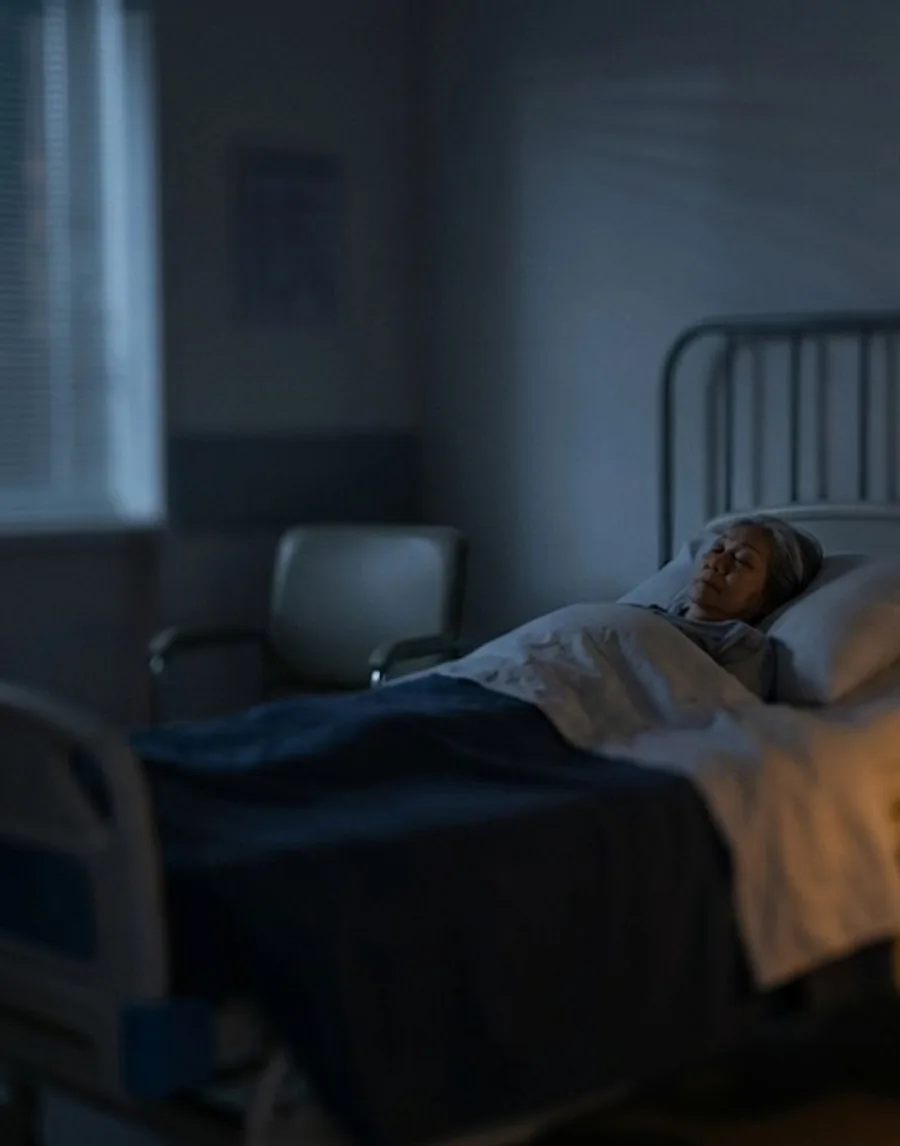
A ward at night. At this hour nobody is beside the bed.

What happened that night

Every value was chosen inside the range a real device can actually produce.

22:10Observation starts
22:58Last speech heard
23:05Observed as lying in bed
23:05Speech has ended and movement settles
23:40–23:48Just after falling asleep, 8 sounds classified as coughs cluster
00:35–00:43Out of bed for 8 minutes after increased movement
01:05Bed empty for 90 seconds — under 5 minutes, so not counted
01:40–04:30Skin-surface temperature up to +2.5℃ above baseline
01:50–02:02Speech after falling asleep (about 3 min)
02:15–02:4018 sounds classified as coughs within 25 minutes
02:58–03:068 minutes where the two occupancy judgements disagree — hatched
03:12One loud impact sound (the cause is not ruled on)
03:40–03:46Out of bed for 6 minutes after increased movement
04:50–05:05Bed empty for 15 minutes — the third time tonight
05:10–06:1060 minutes without movement
06:14Movement starts again
06:30Observation ends

Sleep monitoring

Nothing is worn and no camera is used. Set it beside the bed and it records the night; in the morning you see that night on one page.

Example data
Time asleep (estimate)
7 h 9 min
23:05 ~ 06:14
Movement stretches (tossing and turning, etc.)
9
20 brief moves that stopped at once are counted separately
Sounds classified as snoring
6 min
Sounds classified as coughs
26
Bed empty
3
only absences longer than 5 minutes are counted
Fell asleep (estimate)
23:05
Woke (estimate)
06:14
00:0002:0004:0006:00
Lying quietlyMovementBed emptyNo recordFell asleep (estimate)Woke (estimate)
SoundClassified as coughClassified as snoringClassified as speech
During the night
  • Started moving within 1 min of a sound: 2 — 02:18 cough · 02:37 cough
  • Speech after falling asleep: 1 — 01:51
  • Cough — while asleep 26 (23:39~02:40)
Only what happened gets a line; nothing happened, no line. “Started moving after a sound” is an order in time, not a cause.
Example data — not a real patient record. A made-up night, drawn with the same calculations as the screens. Sleep onset is taken as the point where speech ended and movement settled; waking, as the point where movement last started again. A person lying awake and still gives the same signal as a person asleep, so both times are estimates.
What it shows
Estimated sleep onset and waking, the stretches of tossing and turning in between, sounds classified as coughs or snoring, and time out of bed — gathered on one ribbon, minute by minute. What happened during the night (movement right after a sound, speech after falling asleep, when coughs came, long spells in one posture) gets a line only when it happened. If a temperature and humidity sensor sits beside the bed, one more line gives the room’s range while asleep.
What it does not say
It does not report sleep stages, sleep quality, deep sleep or apnoea. This device cannot measure them.
“None recorded” is not “did not happen”
It means no sound was recorded under that class. It does not claim that sounds the microphone missed did not happen.

The sample screens neither read real observation data nor control any device. They build a made-up night inside the browser, and any request that is not on the list is blocked.